Tuesday, May 18, 2010
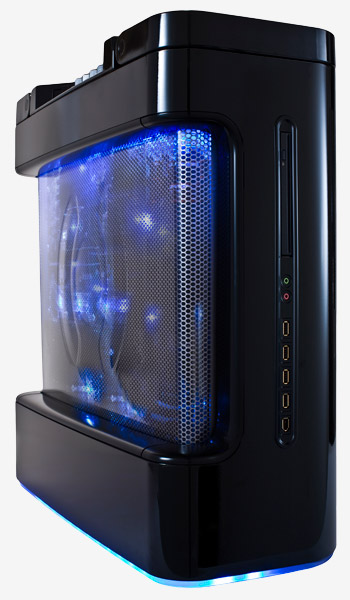
Gigabyte Technology Motherboard, Intel G41, Core 2 Extreme, Matx, MAX 4GB DDR3, PCIEX16, Pciex, 2PCI, GBE, VID, AUD,Sata
Saturday, May 15, 2010
Microchip Wins Top Technology Awards for its eXtreme Low Power PIC[R] Microcontrollers, mTouch[TM] Sensing Solutions and Analog Products.
(2) (MultiChip Package) A chip package that contains two or more chips. It is essentially a multichip module (MCM) that uses a laminated, printed-circuit-board-like substrate (MCM-L) rather than ceramic (MCM-C). 651/2/5 operational amplifiers (op amps). EDN's technical editors nominate the most unique, state-of-the-art electronics products, and then let its readership vote for the candidates via an online balloting process. EDN then uses a combination of these audience votes, balloting of its Editorial Advisory Board, and voting by its editorial staff to determine the ultimate winner in each category.
"Microchip continues to gain industry recognition for the leading technology that customers have already come to expect, including highly integrated PIC microcontrollers with the world's lowest power consumption," said Ganesh Moorthy, Microchip COO. "Designers also prefer the flexibility of our open-source mTouch sensing solutions, and the synergistic convenience of our broad portfolio of low-power analog products. We are honored by all of these prestigious awards, and will continue to bring our customers the very best solutions for their embedded design needs."
The EN-Genius Network named Microchip's MCP2036 Inductive Touch-Sensing Analog Front End (AFE (Apple File Exchange) An earlier Macintosh utility that converted data files between Mac and PC formats. It also included a file translator between IBM's DCA format and MacWrite. ) its Product of the Year in the "Best AFE Sampling System" category. Award winners are selected from among the products reviewed by their editorial team during the course of the year, on the basis of technical merit and likelihood of market success.
Finally, two of the aforementioned Microchip products were also finalists in Design News Magazine's annual Golden Mousetrap Awards, which recognize engineering innovation and creativity in product design. The MCP651/2/5 op amps were named in the "Components, Hardware & Interconnects" category, while the PIC24F16KA microcontrollers were named in the "Power Management" category.
For additional information about the products in this press release, contact any Microchip sales representative or authorized worldwide distributor, or visit Microchip's Web site at http://www.microchip.com/get/9B9W.
About Microchip Technology
Microchip Technology Inc. (NASDAQ: MCHP) is a leading provider of microcontroller and analog semiconductors, providing low-risk product development, lower total system cost and faster time to market for thousands of diverse customer applications worldwide. Headquartered in Chandler, Arizona, Microchip offers outstanding technical support along with dependable delivery and quality. For more information, visit the Microchip website at http://www.microchip.com/get/9B9W.
Note: The Microchip name and logo, and PIC are registered trademarks of Microchip Technology Inc. in the USA and other countries. mTouch is a trademark of Microchip Technology Inc. All other trademarks mentioned herein are the property of their respective companies.
High-res Photos Available Through Flickr or Editorial Contact (feel free to publish):
* MCP651/2/5 Op Amps: http://www.microchip.com/get/PETD
* PIC24F16KA Microcontrollers: http://www.microchip.com/get/93WK
* MCP2036 Inductive Touch-Sensing AFE: http://www.microchip.com/get/00HR
RSS Feed for Microchip Product News: http://www.microchip.com/get/BDR6
The State of Oil Spill Cleaning Technology

Since the Exxon Valdez oil spill wreaked havoc on the Alaskan shoreline over 20 years ago, there have been few advances in technology for cleaning up after an accident. Here is an overview of the cleanup technologies on hand for the Deepwater Horizon spill.
The Deepwater Horizon saga playing out in the Gulf of Mexico is officially a Humpty Dumpty situation. On Sunday, President Barack Obama arrived in Louisiana to reaffirm the government's "all hands on deck" approach to combating the spill. All the king's horses and all the king's men are mustered in the Gulf, in the form of thousands of oil spill responders, a Coast Guard strike force a hundred vessels strong, 100,000 meters of containment boom, the Air Force's 910th Airlift Wing, the Secretaries of the Interior and Homeland Security and fleet of fisherman-cum-boom-layers, and one-third of the world's oil dispersant supply, just to name a few.In addition to the massive accumulation of manpower in the region, federal and local authorities, working in conjunction with BP, which operated the now-collapsed rig, have deployed every possible technological response in an attempt to stem the oily tide, which is approximately 130 miles long and 70 miles wide, both beneath the sea and on the surface.
The Situation Underwater
At present, it is estimated that the three leaks, located 50 miles from the Louisiana coast, and 5000 feet below sea level, are spewing oil at a rate of 200,000 gallons per day. BP is trying to stop the flow with a three-pronged approach. Initially, a number of remote-controlled robotic submarines were dispatched to the gulf floor in an attempt to close a series of valves that would halt the leakage. Thus far, these efforts have proved fruitless, with one BP official telling ABC news, it's like trying to perform "open heart surgery … in the dark."While the robots toiled undersea, BP also took other, less immediate steps, including positioning another rig over the leak site that will drill a "relief well" meant to divert the flow away from the Deepwater Horizon leaks. In the meantime, efforts are also underway to construct three massive cement-and-steel capping "domes." These will act like 40-foot tall, 70-ton vacuum attachments, which will cap the leaks and channel the oil up pipes to recovery tankers on the surface. But the domes are still days from being completed and have never been tested at such great depths.
And on the Surface
With its current leakage rate, experts predict, the Deepwater Horizon spill could eventually total nearly 20 million gallons of oil. For comparison, the amount of oil spilled by the Exxon Valdez in 1989 was 11 million gallons. To mitigate potential damage to the Gulf Coast and to prevent environmental devastation on the scale of that infamous Alaskan spill, spill responders are using every weapon in their arsenal.The Cleanup: A Three-Pronged Approach
According to Elise DeCola, an oil spill specialist with the environmental consultancy Nuva Research, there are three ways to combat an oil slick on the open sea. The first tactic is the so-called mechanical approach, which comprises the use of a boom to corral and deflect oil and skimmers to collect it.
"That's the preferred approach because it's the only one that takes the oil out of the environment," DeCola says. "It's labor-intensive and it's equipment-intensive. With a successful mechanical recovery, you might get 20 percent of the oil that you encounter."
The second approach is to apply dispersants to the slick. These detergent-like solvents are typically deployed from sea vessels operating around the slick, or from aircraft overhead. Additionally, BP and the National Oceanic and Atmospheric Administration are attempting to apply dispersants below sea level using robotic submarines, though the efficacy of this tactic is still undetermined. When dispersants mix with the slick, it breaks the oil into droplets, suspending it in the water column to be dealt with naturally. "They've been applying these in the Gulf," DeCola says. "An off-shore blowout is the textbook case for using dispersants because you don't have to worry about misapplication or hitting a marsh area." As of May 2, more than 156,000 gallons of dispersant have been applied to the slick, with an additional 75,000 gallons available.
The final tactic being deployed in the Gulf is in situ burning. Oil is corralled using booms to thickness where enough volatiles are present to sustain a controlled burn. Once the oil is burned it forms a tar-like substance that can either be manually removed from the water, or left to decompose naturally, similar to dispersant-treated oil. The Coast Guard conducted an hour-long test burn last Wednesday, but unfavorably strong winds and rough seas have prevented any further in situ burning.
Dr. Gerald Graham, a 30-year veteran in the oil spill business, says all three standard approaches remain essentially the same as they were at the time of the Exxon Valdez spill, incremental improvements have been made in all areas. Booms are more resilient in fast currents, for example, and dispersants are considerably less toxic than they once were. The biggest improvements, according to Graham, have come in information technology, and how responders collect and use data—oil spill response atlases, spill-trajectory modeling, satellite spill sensing, and using laser fluorosensors to detect spills from aircraft have all become commonplace in the years since Exxon Valdez.
Moreover, says Graham, the responders using these instruments are now trained professionals, whereas two and three decades ago, it was "a dirty job for someone who was about to retire. Nobody wanted to do it."
"It's still a lot of grunt work," Graham says. "It's still throwing personnel and equipment at the spill and dealing with Mother Nature and her whims."
Next-Gen Cleaning Tech
Extreme Spill Technology's "High Speed" Skimming Vessel Mechanical clean-up technology tends to work only in placid waters. Booms and skimmers can be rendered ineffective and unsafe in currents of more than 1 knot and waves exceeding 1.5 meters. According to David Prior, CEO and lead designer at Extreme Spill Technologies, his boat—the method for which has been successfully demonstrated for the Canadian Coast Guard—can not only handle rough seas, it can also travel at much higher speeds.
Case Western Reserve's Aerogel In February researchers at Case Western Reserve University unveiled a sponge-like material of their creation composed of 2 percent clay, 2 percent plastic and 96 percent air. Their lab tests demonstrate how the sponge (called Aerogel) when applied to polluted water is capable of absorbing the oil and leaving behind the water. It can then be squeezed clean so that the oil can be recycled.
Tuesday, April 13, 2010
Epson Endeavor Pro7000 Extreme Edition Core i7 desktop computer

Intel’s Core i7 processors promises raw power. And this powerful processor has been featured in the latest Extreme Edition of Endeavor series desktop computer by Epson labeled as Pro7000. Endeavor Pro7000 Extreme Edition features Intel Core i7-980X processor. Whether it would be gaming or multimedia tasks, Pro7000 desktop PC offers you with the best of performance.
In addition to its 3.33GHz Intel Core i7-980X processor, it offers you with 3GB of PC3-8500 DDR3 SDRAM. And together, they offer you with incredible robustness and stability.
Extreme Edition features superior graphical support by ATI Radeon graphic card. It offers you with ATI Radeon HD 3450 which inject 256MB of VRAM. Endeavor Pro7000 might not prove to be a sheer gaming or multimedia machine, but it is surely a powerful computing machine that your regular desktop computer.
With Pro7000 desktop PC, you need not worry much about its storage space as it offers you with 250GB of SATA HDD which runs at 7200rpm. And the best part about this Epson Endeavor desktop computer is the fact that it is upgradable. Based on your requirement and budget, you can enhance its RAM up to 12GB. In addition to it, it also offers you with number of Hard Disk capacity configurations.
You can also choose to equip it with Blu Ray recorder, and select the graphical support from ATI Radeon HD 4650 512MB, ATI Radeon HD 5750 1GB, NVIDIA GeForce GTX 275 896MB, ATI Radeon HD 5870 1GB, NVIDIA Quadro FX1800 768MB graphic cards. The basic version of Endeavor Pro7000 is being sold at 261,870 Yen (2100€).
Sunday, April 11, 2010
Hardcore Computer Reactor Extreme PC

$9K Liquid Cooled Gaming Rig Makes Big Splash
The ancient art of overclocking is more delicate ballet than exact science. The goal is to force your hardware to perform at much higher speeds than the manufacturer intended, while compensating for the immense amount of heat generated — heat that can cause system instability, and ultimately deep-fry your PC's innards. Beat the heat and your overclocked PC will frag faster and live longer.
This usually means air-cooling with loud fans, water-cooling, or some combination of the two. Hardcore Computer is trying something a bit different — submerging all of the fancy, expensive PC components in 4.5 gallons of industrial cooling fluid.
This is the DNA that makes up the Reactor PC. Weighing in at just over 100 pounds, this behemoth is clad in 2.5 mm of aircraft aluminum. The tank that contains the fluid is comprised of a plastic similar to a NASA astronaut's visor, plus it's bullet proof, should your gaming lair come under small arms fire.
We received a Reactor test unit packed with variety of high-performance parts, including an Intel Core 2 Extreme processor overclocked to 4 GHz, 4 GB of ram, and three 64-GB solid state drives for wacky-doodle fast (and expensive) data-transfer rates.
Gamers will be interested in the slot loading DVD burner (or optional Blu-ray reader), and the three Nvidia GTX 280s running in SLI. In addition to seeing impressive scores on benchmarking software, we ran the all-important Crysis test, and saw an average of 40 to 45 frames per second with every setting pumped to the absolute maximum. And there's still room to push the pre-overclocked components even further.
For the tinkerers, haxz0rs and IT-minded in the audience, the Reactor is built with high-performance server-grade technology in mind. This includes a pair of 650-W power supplies that provide a total of 1300 watts of juice, plus redundant backup — if one dies, the other will keep on churning. A pair of hot-swappable drives, weighing in at 1 TB each, let you switch your battle plans out for family vacation videos without ever shutting off your PC. Wifi is even built in, complete with two funky antennas that would normally be considered eyesores but somehow look right on the rig.
A substance called Core Coolant is the bloodstream of this gaming monolith. It's a biodegradable, dielectric, non-toxic cooling oil created by Hardcore Computer, and it's is responsible for chilling your key components. Like the typical liquid-cooled setup, a pump circulates the fluid through the Reactor's chassis and into a radiator, where the warmer fluid is made frosty and sent back into the tank.
The key difference between an air- or water-cooled setup and the Reactor is unparalleled heat transfer: You can overclock every piece of your machine without fear of a catastrophic burnout. Fans are positively archaic; air simply can't disperse the amount of heat generated by a gaming rig — it's often in the area of 158 degrees F. Liquid-cooled systems are more efficient, but while the maze of tubes might draw heat from the CPU and graphics cards, plenty of other thermal-generating components are left at risk, typically resulting in system instability.
Submerged cooling isn't perfect. The most obvious issue is the size and weight of the thing, with 4.5 gallons of fluid sloshing around in there. And no matter how careful you are, you'll want to keep a roll of paper towels handy, because there will be a bit of unavoidable splashing when you inevitably pop the lid and start poking around inside the machine. Luckily, Core Coolant (which is clear, odorless, and has the consistency of mineral oil) is safe enough to drink, according to the company. (Please don't drink the Core Coolant.)
But the biggest caveat with the Reactor is that you're buying into an ecosystem. While many of the components can be swapped with off-the-shelf parts, the motherboard and power supplies are packed into custom shells. That means when you want to upgrade the motherboard (maybe to check out that nifty Core i7 CPU from Intel) you'll have to contact Hardcore Computer directly to pick out a new one.
And finally, there's the price.
The configuration we tested came in at a hefty $9,790. But the models start at a reasonable $3,670.
How is that reasonable? A bit of painstaking calculation (method: Google + newegg + napkin) reveals that the DIY price for the components in the starter model comes to roughly $1,000. Essentially you pay about $2,700 for service, a warranty, Core Coolant and a chassis that will support a substantial amount of abuse, overclocking and general tinkering. With the right amount of research, a savvy enthusiast could customize a build to fit their budget and overclock individual components until their performance dwarfs far more expensive machines.
But really, outside of a few supercomputers and aquarium tanks filled with mineral oil, we can almost guarantee you'll be pressed hard to find a PC like this anywhere else.
For more photos of the Reactor PC, inside and out, check out our photo gallery: Soak It To Me: Inside Liquid-Suspended Gaming PC
WIRED Unsurpassed overclocking performance. High quality components at a price that's semi-reasonable. Those LEDs are optional.
TIRED Weighs as much as a '72 Buick and is twice as ugly. Potentially very messy — don't spill Core Coolant on tile floor, it gets slip 'n' slide slick. If Hardcore Computer ever flounders, how will you upgrade those custom parts?